Googlebook Laptops Powered by Snapdragon X Elite Gemini AI
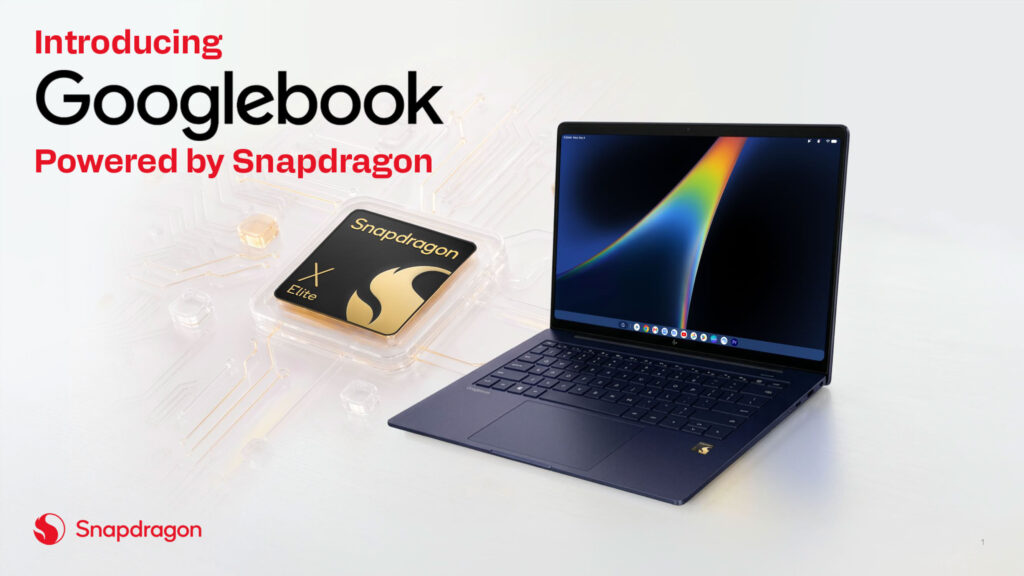
Googlebook is a new class of laptop officially introduced by Qualcomm and Google, powered by the Snapdragon X Elite platform and architected around Gemini Intelligence. These devices deliver native Android application support, agentic cross-device features, and multi-day battery efficiency. Initial hardware launches from Dell and HP are available for pre-order immediately, per the report published by Adam Lobo TV.
Key Facts
The table below consolidates the core specifications and platform attributes disclosed for the initial Googlebook hardware wave. Pricing, display sizes, memory configurations, and exact battery capacities were not disclosed in the source material.
AttributeValue
Product CategoryGooglebook laptops (new computing category built ground-up for Gemini Intelligence) ManufacturersQualcomm (silicon platform) and Google (AI software); Dell and HP (initial hardware) ProcessorQualcomm Snapdragon X Elite with custom Oryon CPU architecture AI ProcessingLocal Hexagon NPU + Gemini AI Application LayerNative Android App Engine (zero-emulation execution of phone apps and games) Continuity ToolsCast my Apps, Magic Pointer, Rambler Battery ClaimMulti-day battery life with sustained NPU compute Gaming FeaturesSnapdragon Elite Gaming (frame-rate boosting, reduced touch latency, enhanced graphic rendering) Pre-Order StatusAvailable immediately from Dell and HP
Googlebook laptops from Dell and HP are available for pre-order immediately, running the Snapdragon X Elite processor with multi-day battery life and native Android app execution.
What Is a Googlebook and Why Was It Created?
Googlebook is a laptop category built from the ground up for Gemini Intelligence, pairing Qualcomm Snapdragon X Elite silicon with Google’s agentic AI framework at the hardware level. It skips legacy desktop overhead entirely, unlike the earlier Windows-on-ARM migration, and eliminates the need for third-party mirror apps or battery-draining emulation layers for Android cross-device workflows.
By placing Google’s agentic AI framework directly on top of Qualcomm’s custom Oryon CPU architecture and dedicated NPU, the platform targets deep hardware-level integration rather than surface-level software tricks. The Snapdragon X Elite provides the raw local compute necessary to execute complex neural network tasks locally, keeping battery consumption low while maintaining fast response times.
Googlebook is a Qualcomm-Google co-developed laptop platform running the Snapdragon X Elite processor with Gemini AI integrated at the silicon level, launching first from Dell and HP.
How Does Native Android App Execution Work Without Emulation?
Native Android app execution on Googlebooks runs phone applications directly on Snapdragon X Elite silicon without virtual machines or emulation layers. The system pairs a Native Android App Engine with Snapdragon Elite Gaming enhancements to deliver high frame rates, low latency, and proper GPU acceleration without excessive thermal load.
According to the source material, instead of running mobile software inside heavy virtual machines, Googlebooks run Android applications directly on the silicon. This enables proper mobile apps such as CapCut, Lightroom Mobile, and mobile games to run at native speeds without draining the battery in two hours. Games benefit from frame-rate boosting, reduced touch latency, and enhanced graphic rendering for native Android mobile titles.
Native Android app execution on Googlebooks eliminates emulation layers entirely, running mobile apps directly on the Snapdragon X Elite silicon with GPU acceleration, high frame rates, and low latency.
What Agentic Cross-Device Tools Does Googlebook Include?
Googlebook ships with three primary continuity tools: Cast my Apps, Magic Pointer, and Rambler. Cast my Apps and Magic Pointer unify control between an Android handset and the laptop, letting users throw active phone tasks to the laptop display instantly. Rambler acts as an active context tracker across local apps, pulling real-time information from emails, calendar feeds, and active browser tabs into the active workspace.
Rambler is described as a system-wide AI utility that scans local screen context, active emails, and schedules to surface actionable suggestions without requiring manual copy-pasting between workspace apps. If Rambler can sift through cluttered inbox updates and pull out flight details or meeting notes without lag, the platform becomes a genuine contender for mobile professionals commuting between meetings, according to Adam Lobo TV.
The Googlebook’s agentic toolset — Cast my Apps, Magic Pointer, and Rambler — unifies Android phone and laptop controls while Rambler actively tracks emails, calendars, and browser tabs to surface context-aware suggestions.
What Did the Reviewer Say About Real-World Performance?
“Here’s a lowdown from someone who reviews hardware daily: spec sheets don’t mean a thing if the device chokes when you open twenty tabs while editing video at a local cafe.” — Adam Lobo, Adam Lobo TV
Adam Lobo’s verdict, described as the “Mamak Test” in the source, argues that the Qualcomm-Google partnership fixes a fundamental issue with light laptop productivity: running web apps inside basic browsers always felt like a temporary solution. Native Android app execution on top of ARM silicon makes total practical sense, delivering proper mobile apps at native speeds without the two-hour battery drain. Qualcomm’s Hexagon NPU handles local AI tasks well, though Gemini needs to deliver genuine utility rather than constant notifications, the review notes.
Adam Lobo’s field test conclusion states that spec sheets are meaningless if a device fails under real-world multitasking, and that native Android execution on ARM silicon makes practical sense for daily productivity.
Who Is the Googlebook For?
Googlebooks target mobile professionals who need unified cross-device workflows across laptops and smartphones without clunky third-party mirror apps or battery-draining emulation layers. The source specifically identifies mobile professionals in Malaysia commuting between meetings as a potential audience, alongside premium productivity users seeking all-day battery claims and custom chassis designs from Dell and HP.
The platform also extends to mobile gamers through Snapdragon Elite Gaming, which brings frame-rate boosting, reduced touch latency, and enhanced graphic rendering for native Android mobile titles to the laptop form factor. This positions Googlebook for users who want console-quality mobile gaming without the thermal penalties of traditional emulation-based approaches.
Googlebooks are built for mobile professionals and gamers who need native Android apps, cross-device continuity, and multi-day battery life in a premium laptop form factor from Dell or HP.
Common Questions
The following questions address the most frequently searched queries about the Googlebook platform based on the source material’s content.
Which manufacturers are releasing the first Googlebook laptops?
Dell and HP are the first manufacturers to release Googlebook laptops, and both opened pre-orders immediately for their initial Snapdragon X Elite configurations. These feature all-day battery claims and custom chassis designs aimed at premium productivity users.
What is Rambler on Googlebook?
Rambler is a system-wide AI utility on Googlebook that scans local screen context, active emails, and schedules to surface actionable suggestions without manual copy-pasting. It acts as an active context tracker that pulls real-time information from emails, calendar feeds, and active browser tabs into the workspace.
Does Googlebook support Android mobile games?
Yes, Googlebook devices support Android mobile games through native Android app execution paired with Snapdragon Elite Gaming enhancements. Features include frame-rate boosting, reduced touch latency, and enhanced graphic rendering, allowing mobile titles to run with GPU acceleration without emulation overhead.
Sources and Methodology
This article is based exclusively on the reporting and analysis published by Adam Lobo at Adam Lobo TV, titled “Snapdragon X Elite Powers Googlebooks: Gemini AI Laptops Premiering from Dell and HP,” available at https://adamlobo.tv/snapdragon-x-elite-googlebook-gemini-ai-launch/. The source references the Qualcomm Snapdragon X Elite official portal (qualcomm.com) as a supplementary specification resource for the underlying silicon platform. Specific pricing, display specifications, memory options, and exact battery capacities were not disclosed in the source material; these figures remain unknown at the time of writing. This article was last updated on October 2026.
All facts in this article derive from Adam Lobo TV’s report on the Snapdragon X Elite Googlebook launch; Qualcomm’s official portal serves as the referenced supplementary specification source while pricing and device-specific specs remain undisclosed.
Related coverage
More Laptops & PCs →Filed under
- #Gaming
- #News
Network · latest from sister sites