Microsoft Scales Azure Maia Silicon to Gigawatt Scale
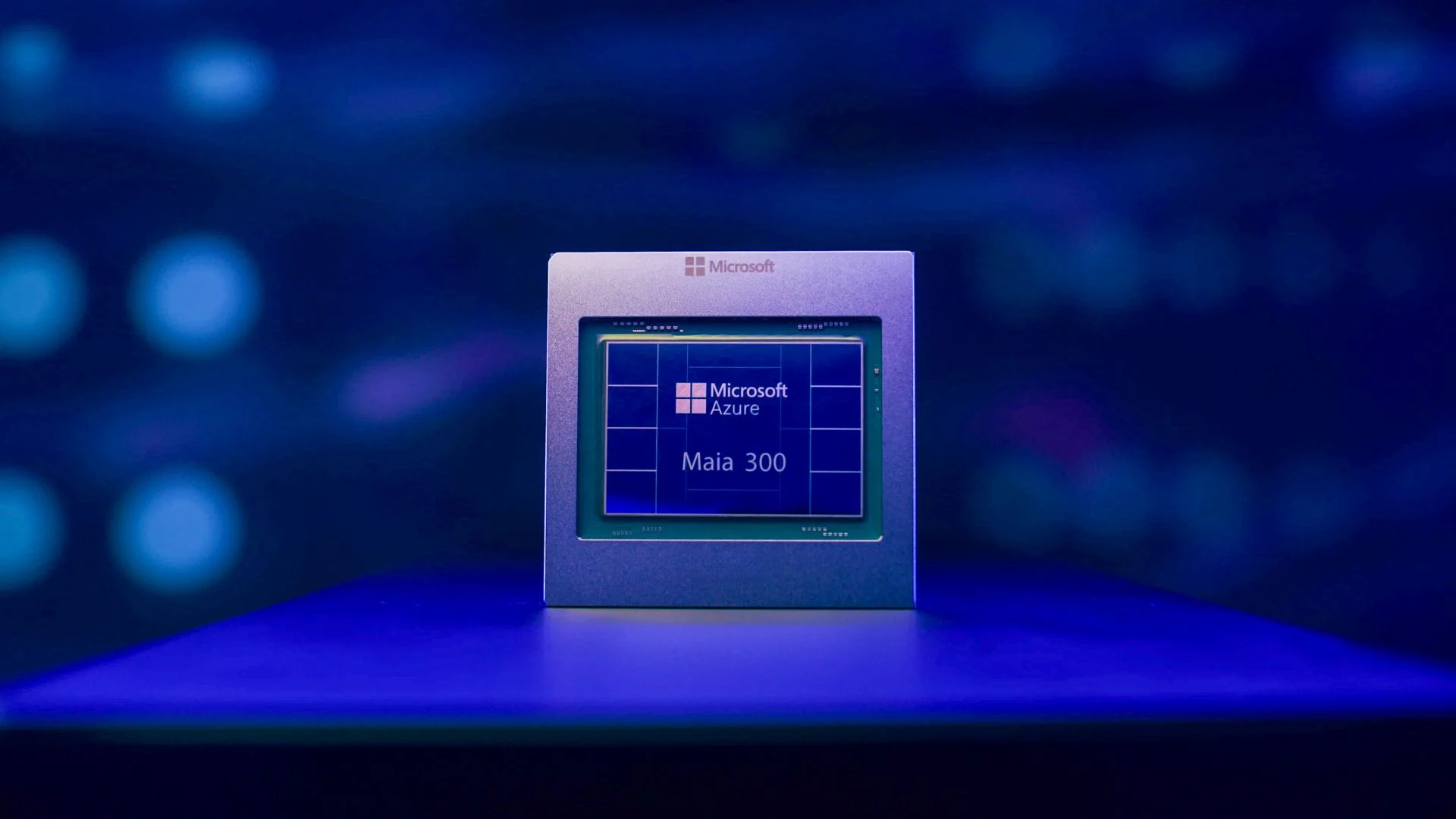
Microsoft has announced plans to expand its custom Azure Maia artificial intelligence infrastructure to multi-gigawatt deployments starting next calendar year in 2027. Chief executive Satya Nadella confirmed that the company's proprietary silicon will become the primary inference system across its core internal services, including Microsoft Copilot and Teams. Alongside the infrastructure expansion, Microsoft revealed the Maia 300 chip, built on TSMC's N2P process node. For enterprise customers and cloud users across Malaysia, this infrastructure shift directly affects the computing backbone and efficiency of Microsoft's cloud productivity software, reducing reliance on third-party graphics processing units.
Key Facts
| Attribute | Value |
| Announced Infrastructure | Azure Maia custom AI silicon fleet |
| New Chip Generation | Maia 300 |
| Existing Deployed Chip | Maia 200 |
| Manufacturing Node (Maia 300) | TSMC N2P process node |
| Maia 300 Efficiency Claim | 40% more tokens per watt versus leading GPU-based systems |
| Maia 200 Efficiency Claim | Up to 1.7x more tokens per watt across Teams and Copilot |
| Current Deployment Regions (Maia 200) | US, Europe, and Australia |
| Target Scale Date | Multi-gigawatt deployments starting in 2027 |
| Pricing | Not disclosed in source |
What Is the Maia 300 System Architecture?
The Maia 300 represents Microsoft's third-generation custom silicon designed specifically for inference-first cloud workloads. Engineered to handle memory-intensive, long-context, and decode-heavy artificial intelligence tasks, the architecture focuses on minimising data movement while increasing compute density. It employs a multi-chiplet design manufactured on TSMC's advanced N2P process node to balance memory bandwidth, datacentre networking, and per-watt power efficiency.
According to Microsoft, Maia 300 delivers higher artificial intelligence throughput from every datacentre rack while extracting greater memory bandwidth per watt consumed.
Starting next calendar year, we will scale our Maia family to multi-gigawatt deployments, making it the primary inference system for our own product and services. And we’re introducing Maia 300, which delivers 40% more tokens per watt compared to leading GPU-based systems.
Satya Nadella, CEO of Microsoft
Microsoft's Maia 300 leverages a TSMC N2P multi-chiplet architecture to deliver 40% more tokens per watt than leading GPU-based systems.
Where Is Microsoft Azure Maia Currently Deployed?
Microsoft's custom silicon deployment is currently limited to its Maia 200 processors running in datacentres across the United States, Europe, and Australia. These processors handle operational workloads for internal applications, including Teams, Copilot, and Cowork. The current operational fleet delivers up to 1.7 times more tokens per watt for these integrated features compared to conventional infrastructure.
The planned 2027 scaling schedule marks a strategic transition where Microsoft moves from regional deployments to multi-gigawatt cloud clusters to support primary inference across its service catalogue, challenging NVIDIA's dominance in infrastructure hardware.
Maia 200 hardware is currently operating in the US, Europe, and Australia, delivering up to 1.7 times more tokens per watt across Copilot and Teams.
What It Means for Malaysian Buyers
Microsoft has not confirmed any local datacentre deployment dates or direct hardware availability for the Azure Maia series in Malaysia. The company's confirmed active deployments for Maia 200 remain confined to facilities in the US, Europe, and Australia, with no Southeast Asian rollout announced. Local organisations utilising Microsoft 365, Teams, and Copilot will interact with Maia silicon solely via cloud-hosted backends serving global application traffic.
Because Azure Maia is internal infrastructure rather than commercial retail hardware, there is no direct retail pricing, SIRIM certification filing, or Malaysian telco package attached to this announcement. Enterprise cloud buyers in Malaysia running workloads on Azure cannot purchase Maia chips directly, but may see service-level efficiency adjustments as Microsoft rolls out multi-gigawatt infrastructure globally from 2027.
Microsoft has not confirmed any direct deployment of Azure Maia silicon in Malaysian datacentres.
Common Questions
Can Malaysian enterprises buy the Maia 300 processor?
No, Malaysian enterprises cannot purchase Maia 300 hardware. Microsoft develops Azure Maia strictly as proprietary cloud infrastructure to run internal inference services rather than selling the physical chips directly to commercial enterprise buyers.
Which applications run on Microsoft Azure Maia silicon?
Azure Maia processors currently run inference workloads for Microsoft's built-in artificial intelligence features. The source explicitly confirms active deployment supporting Microsoft Teams, Microsoft Copilot, and Cowork applications across international datacentres.
When will Microsoft deploy multi-gigawatt Maia infrastructure?
Microsoft plans to scale the Azure Maia family to multi-gigawatt deployments starting in the 2027 calendar year, when Maia 300 will serve as the primary inference platform across its products.
Sources and Methodology
Data verified against official statements from Microsoft and reporting published by Lowyat.NET on 13 October 2026. Hardware specifications, efficiency metrics, node manufacturing details, and regional availability reflect only verifiable claims stated in the primary source material. No retail prices or foreign currency conversions were recorded, as Microsoft has not published commercial component pricing.
Related coverage
More Laptops & PCs →Filed under
- #Tech
- #Xbox
- #PC Gaming
Network · latest from sister sites