Synology Unveils Budget Friendly PAS3600 Storage System
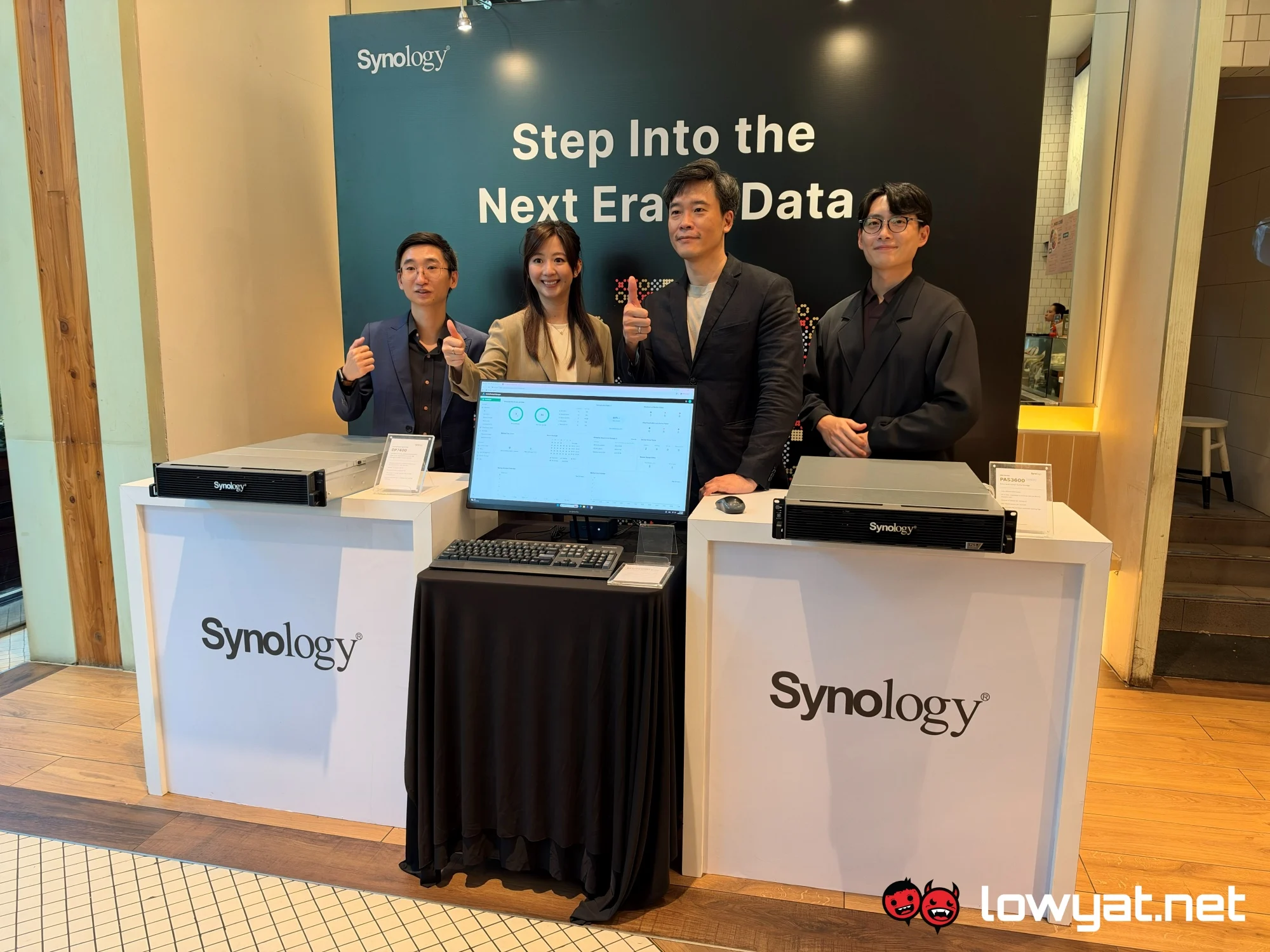
Taiwanese data solutions provider Synology announced the PAS3600 enterprise storage system alongside the DP7400 backup appliance and SPU7200D dual-port SSDs at its Annual Press Event 2026. Designed as an entry-level counterpart to the flagship PAS7700 that debuted in Malaysia earlier in 2026, the PAS3600 targets small and medium-sized businesses seeking active-active high availability without the cost premium of an all-NVMe infrastructure. Official Malaysian retail pricing and specific local release dates for the PAS3600 have not yet been disclosed.
Key Facts
| Attribute | Value |
| Manufacturer | Synology |
| Announced Hardware | PAS3600 storage system, DP7400 backup appliance, SPU7200D series SSDs |
| PAS3600 Form Factor | 2U chassis, 12 drive bays |
| PAS3600 Expansion | Up to 24 drives via PAX212 expansion unit |
| PAS3600 Architecture | Active-active dual controller, SATA-based |
| PAS3600 Memory | Up to 256GB per controller |
| PAS3600 Connectivity | Optional 10/25GbE NIC and 16/32G FC |
| PAS3600 Operating System | DSM Enterprise |
| DP7400 Raw Capacity | 140TB |
| DP7400 Monitoring Capacity | Up to 2,500 servers |
| DP7400 Network Ports | Two 10GbE LAN ports, one 1GbE management port |
| SPU7200D Performance | Up to 140,000 4K write IOPS |
| Malaysian Availability | Unannounced (PAS7700 launched earlier in 2026) |
| Announcement Date | 22 October 2026 |
How Does the PAS3600 Differ From the PAS7700?
The Synology PAS3600 differs from the flagship PAS7700 by adopting a cost-efficient SATA-based drive architecture rather than an end-to-end NVMe pipeline. While both systems utilize an active-active dual controller setup to eliminate single points of failure, the PAS3600 is engineered specifically for general-purpose, everyday business workloads that do not demand ultra-low-latency flash arrays.
Housed in a 2U chassis with 12 drive bays, the PAS3600 scales up to 24 drives through a companion PAX212 expansion unit. Each controller supports up to 256GB of memory, with modular networking options that include 10/25GbE network interface cards and 16/32G Fibre Channel adapters. On the software side, the hardware runs DSM Enterprise, maintaining interface parity with Synology's broader product ecosystem to reduce administrative learning curves.
The Synology PAS3600 combines an active-active dual controller design with a SATA storage architecture to reduce deployment costs for standard enterprise workloads.
What Capabilities Do the DP7400 and SPU7200D Bring to Enterprise Infrastructure?
The Synology DP7400 is a dedicated rackmount backup appliance offering 140TB of raw storage capacity to monitor and protect up to 2,500 servers across hybrid infrastructures. Operating on Synology's ActiveProtect Manager, the system provides built-in ransomware protection for physical host devices, virtualised environments, and software-as-a-service platforms, backed by dual 10GbE LAN ports and a 1GbE management interface.
Concurrently, Synology introduced the SPU7200D series of enterprise dual-port solid-state drives. Built specifically for high-availability NVMe deployments such as the PAS7700, the SPU7200D delivers up to 140,000 4K write IOPS with latency optimization. The drive series incorporates TCG Opal self-encrypting drive standards alongside crypto erase and Physical Security ID mechanisms for rapid, hardware-level data sanitisation.
Synology's DP7400 appliance centralises backup oversight for 2,500 servers with 140TB of raw capacity, while the SPU7200D SSDs supply 140,000 4K write IOPS for NVMe systems.
What It Means for Malaysian Buyers
Malaysian enterprises cannot currently purchase the PAS3600, as Synology has not confirmed local pricing, distributor allocation, or an official commercial shipping timeline for the domestic market. However, because the flagship PAS7700 successfully launched in Malaysia earlier in 2026, regional enterprise IT channels are structurally prepared to support the newer entry-level tier once regional shipments begin.
Organisations in Malaysia currently evaluating dual-controller high-availability hardware must weigh the cost benefits of waiting for official local PAS3600 distribution against available options. Deploying the existing PAS7700 remains necessary if your operations require end-to-end NVMe throughput or SPU7200D storage integration, whereas standard file serving, database hosting, and general virtualization will be served more economically by the SATA-configured PAS3600 upon its local debut.
While the premium PAS7700 is already available in Malaysia, official pricing and local release dates for the entry-level PAS3600 remain unconfirmed by Synology.
Common Questions
When will the Synology PAS3600 be available in Malaysia?
Synology has not disclosed local release dates or availability details for the PAS3600 in the Malaysian market. Prospective commercial buyers must wait for local authorized distributors to announce official shipping timelines and enterprise warranty arrangements.
What is the drive capacity limit of the Synology PAS3600?
The PAS3600 features a base 2U chassis housing 12 SATA drive bays. Storage capacity can be scaled up to a maximum of 24 drives by connecting a single Synology PAX212 expansion unit to the system.
Can the SPU7200D dual-port SSDs be installed in the PAS3600?
No, the SPU7200D series dual-port SSDs are designed for end-to-end NVMe architectures such as the flagship PAS7700. The entry-level PAS3600 utilizes a SATA-based storage design, making it incompatible with these dedicated NVMe solid-state drives.
Sources and Methodology
Information sourced from the official Lowyat.NET enterprise hardware report titled "Synology Announces Entry-Level PAS3600 Storage Solution For Enterprises," authored by Nurul Kamil on 22 October 2026. Hardware specifications, controller limits, and local market contexts reflect disclosures made during Synology's Annual Press Event 2026. No foreign currencies were converted, as Synology withheld all manufacturer suggested retail pricing figures during the initial unveiling.
Related coverage
More More tech →Filed under
- #Tech
Network · latest from sister sites