Developer Boots macOS 27 on Snapdragon X2 with Snapintosh
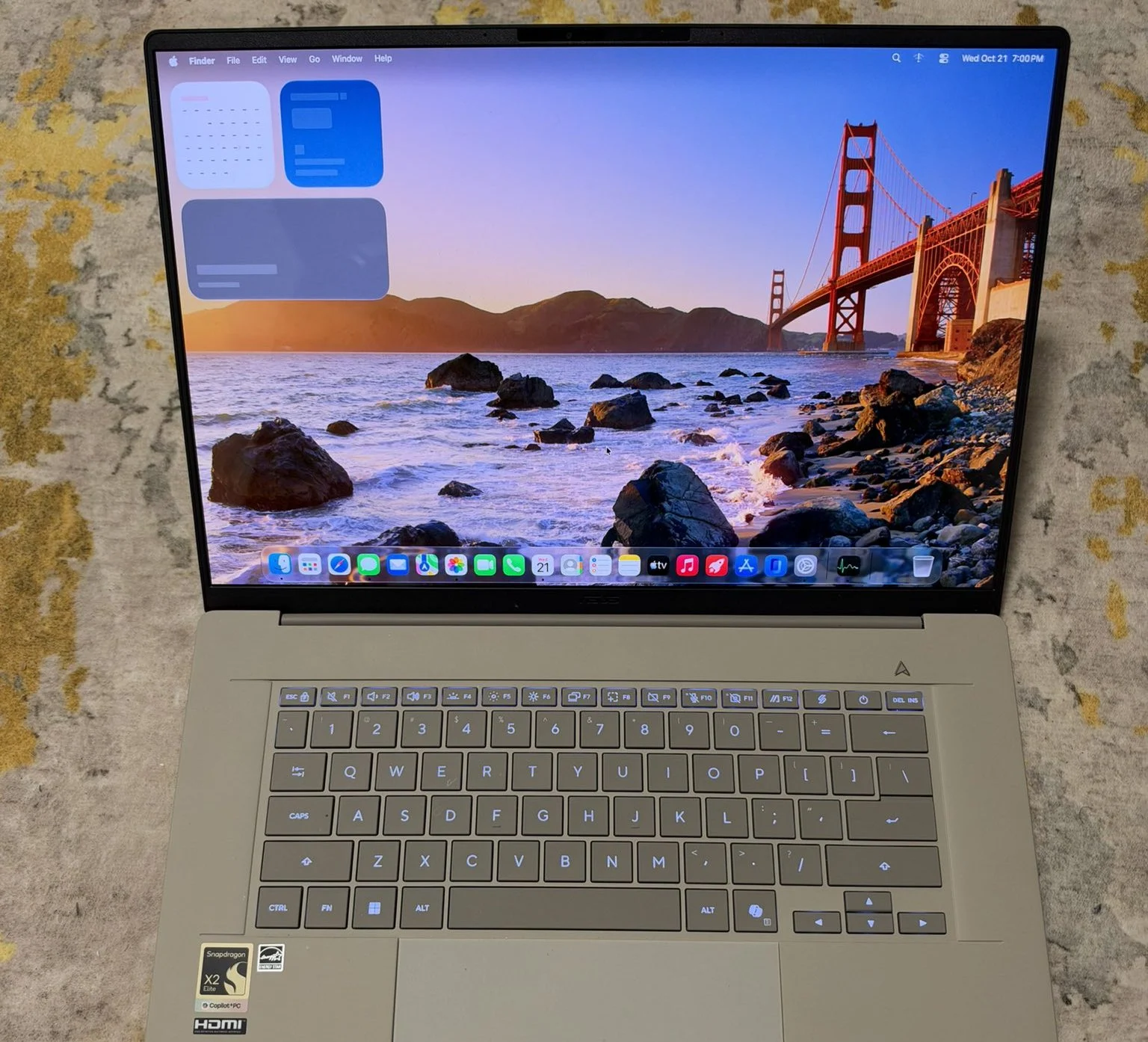
Independent developer Miguel C has released the source code for Snapintosh, an experimental software project that boots Apple's macOS 27 Golden Gate on Qualcomm Snapdragon X2 Series laptop hardware. Published on 22 October 2026, the toolchain uses a custom hypervisor to run an unmodified stock macOS kernel on an ASUS Zenbook A16 equipped with the Snapdragon X2 Elite processor. For Malaysian PC enthusiasts and hardware modders tracking ARM-based computing developments, this marks the first working proof-of-concept of Apple's modern operating system running on Qualcomm's latest PC architecture. However, severe operational restrictions prevent the build from serving as a practical, daily-driver computing alternative.
Key Facts
| Attribute | Value |
| Project Name | Snapintosh |
| Developer | Miguel C (@Acelogic_) |
| Release Date | 22 October 2026 |
| Operating System Target | macOS 27 (build 26A428) Golden Gate |
| Supported Hardware | ASUS Zenbook A16 |
| Supported Processor | Qualcomm Snapdragon X2 Elite (X2E-96-100) |
| Graphics Support | Custom Metal driver for Adreno X2-90 GPU |
| Display Output | 3K (2,880 x 1,800) at 60Hz (capped) |
| CPU Allocation | 6 virtual CPU cores |
| Price | Open-source (software pricing not applicable) |
How Does Snapintosh Boot macOS on Qualcomm Silicon?
Snapintosh operates as an EL2 hypervisor monitor paired with a dedicated toolchain that satisfies the architectural platform contracts Apple's unmodified stock kernel expects from Apple silicon. Because Qualcomm Snapdragon processors share the underlying ARM64 architecture with Apple's M-series chips, the software bridges hardware disparities without requiring an x86 translation layer.
According to project documentation, the hypervisor supplies Apple's Secure Page Table Monitor (SPTM) and Trusted Execution Monitor (TXM) monitor calls, translates the kernel's 16 KiB page tables, and emulates proprietary Apple hardware devices. To avoid software-rendered user interfaces, the project incorporates custom Metal drivers targeting the integrated Qualcomm Adreno X2-90 GPU to provide hardware-accelerated desktop rendering.
Snapintosh boots Apple's macOS 27 (build 26A428) on an ASUS Zenbook A16 laptop with a Qualcomm Snapdragon X2 Elite (X2E-96-100). It is an EL2 monitor (hypervisor) and the toolchain around it. The monitor runs Apple's stock kernelcache (the J700/T8140 kernel) unmodified by default. It supplies the platform contracts that the kernel expects from Apple silicon: the SPTM and TXM monitor calls, translation of the kernel's 16 KiB page tables, and the Apple devices the kernel looks for.
Miguel C, Snapintosh GitHub Readme
Snapintosh executes an unmodified Apple stock kernel by translating 16 KiB page tables and injecting proprietary monitor calls at the hypervisor level.
What Are the Current Limitations of the Port?
The current Snapintosh release is strictly an early-stage experimental build that lacks support for critical laptop hardware components and cannot boot on its own. While proof-of-concept desktop acceleration functions, essential input, output, multimedia, and power-management subsystems remain completely non-functional on the single supported ASUS machine.
Hardware utilisation is restricted: the software allocates only six virtual CPU cores, and the Zenbook A16's native 3K (2,880 x 1,800) panel is limited to 60Hz instead of its native 120Hz refresh rate. Furthermore, audio, Bluetooth, built-in webcams, sleep/wake power states, and external display connections are unsupported. While basic Wi-Fi connectivity functions via a Mac-controlled test network, installation requires a physical USB-C tether to an external Mac running macOS 27.
The software cannot boot independently and requires a secondary Mac running macOS 27 tethered over USB-C to complete the startup sequence.
What It Means for Malaysian Buyers
Malaysian consumers and professionals looking for a dual-booting alternative on Qualcomm Snapdragon X2 laptops must not view Snapintosh as a substitute for legitimate Apple hardware. Neither Apple nor Qualcomm endorses the project, and the toolchain provides zero out-of-the-box reliability for work or everyday consumer use in Malaysia.
Prospective laptop purchasers in Malaysia considering the ASUS Zenbook A16 or other Snapdragon X2 laptops must evaluate these machines based purely on native operating system support. Qualcomm announced official Linux support for the X2 Series at its September Snapdragon Summit, with Debian and Ubuntu distributions scheduled for developer release later this year. Local retail availability, official warranty coverage, and SIRIM certification in Malaysia apply strictly to supported operating environments such as Windows and forthcoming official Linux distributions.
Malaysian buyers should not purchase Snapdragon X2 hardware expecting a functional Hackintosh replacement, as the project remains an unstable developer experiment.
Common Questions
Can Snapintosh boot independently on Snapdragon laptops?
No. The current release cannot start on standalone hardware and requires a secondary Mac computer running macOS 27 connected to the ASUS Zenbook A16 via a USB-C cable to facilitate the boot process.
Which laptop models support the Snapintosh project?
Support is currently limited to a single laptop model: the ASUS Zenbook A16 configured with Qualcomm's Snapdragon X2 Elite processor (model X2E-96-100). No other Qualcomm Snapdragon X2 or older Snapdragon laptops are supported.
Does audio, Bluetooth, and full display refresh work on the port?
No. Built-in audio, Bluetooth, external display output, webcams, and the panel's native 120Hz refresh rate are unsupported, capping the native 3K (2,880 x 1,800) screen at 60Hz across six virtual CPU cores.
Sources and Methodology
Information sourced from project technical documentation, public developer disclosures by Miguel C (@Acelogic_) on 22 October 2026, and reporting by Lowyat.NET published on 23 October 2026. Data verification confirmed against Qualcomm's September Snapdragon Summit Linux developer roadmap disclosures. No local pricing, currency conversions, or retail release dates were extrapolated beyond the documented technical source details.
Related coverage
More Laptops & PCs →Filed under
- #Tech
- #PC Gaming
- #Imports
Network · latest from sister sites