Apple iPhone Duo Hands On First Look and Impressions
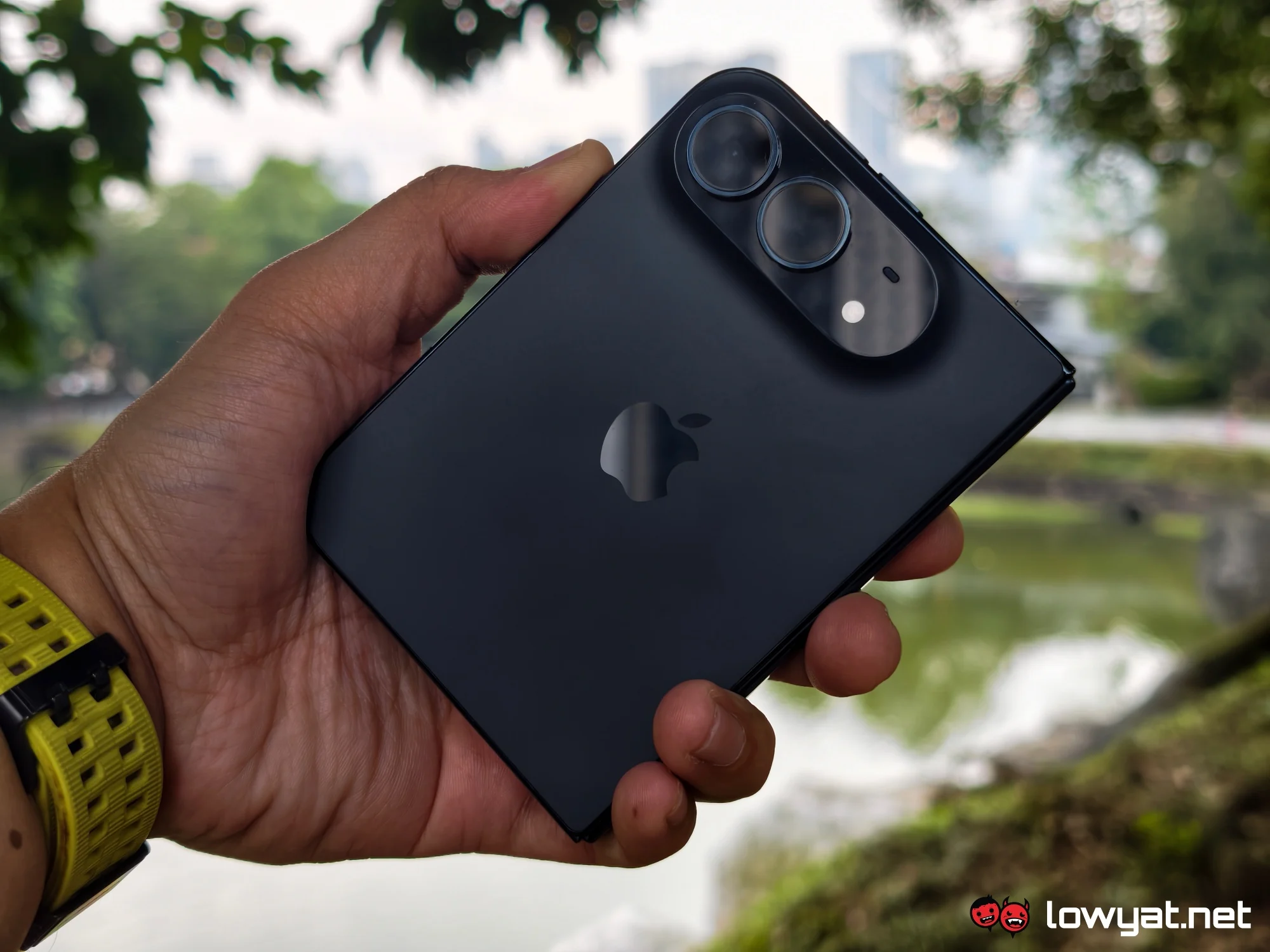
Apple has unveiled the iPhone Duo, its first foldable smartphone, featuring a passport-style form factor and an A20 Pro processor priced from over RM9,000 in Malaysia. Initial hands-on testing published on 26 October 2026 reveals that while the hardware measures 5.2mm unfolded, local everyday applications including Grab and Touch 'n Go eWallet suffer from unoptimised aspect ratios. Malaysian buyers face an ultra-premium price tag alongside unverified reports of display cracking.
Key Facts
| Attribute | Value |
| Device | Apple iPhone Duo |
| Form Factor | Passport-style foldable |
| Processor | Apple A20 Pro |
| Internal Display Dimensions | 4.64 x 6.48 inches (matte finish) |
| External Display | Super Retina with Ceramic Shield |
| Thickness | 5.2mm unfolded; 11.3mm folded |
| Weight | 254g |
| Rear Cameras | 48MP primary, 48MP ultra-wide (no telephoto) |
| Front Cameras | 12MP external cover camera; 4MP under-display internal camera |
| Biometrics and Controls | Touch ID lock button, top-mounted volume rocker, Camera Control button |
| Malaysian Pricing | Starts from over RM9,000 |
| Source Evaluation Date | 26 October 2026 |
How Does the iPhone Duo Hardware Compare With Rival Foldables?
The iPhone Duo adopts a passport-style folding format measuring 5.2mm unfolded, making it Apple's thinnest smartphone to date. However, when closed, the chassis measures 11.3mm thick and weighs 254g, making it noticeably thicker and heavier than its primary competitor, the 9.77mm Samsung Galaxy Z Fold8.
Unfolding the device reveals an internal screen measuring 4.64 by 6.48 inches, presenting an aspect ratio closer to a compact iPad mini (which measures 5.3 by 7.69 inches). Apple incorporates a matte anti-glare finish on the internal panel, contrasting with the glossy Ceramic Shield-covered Super Retina external screen. While the folding crease and 4MP under-display camera are barely noticeable during use, physical button placement requires adjustment: the volume rocker sits at the top of the handset, and Apple has fitted a dedicated Camera Control button alongside a Touch ID power button.
The iPhone Duo measures 5.2mm when unfolded but expands to 11.3mm and weighs 254g when closed, undercutting the Samsung Galaxy Z Fold8 in unfolded slimness while exceeding it in folded bulk.
Does iOS Adapt Seamlessly to the Passport Screen Layout?
Apple reworked iOS for the Duo by placing both the Dock and Dynamic Island vertically along the right display edge in folded and unfolded orientations. This layout assists right-handed navigation, though vertical rotation when unfolded returns the Dock to the bottom while keeping the Dynamic Island on the right edge.
System transitions powered by the A20 Pro chip operate smoothly, but third-party software support remains severely limited at launch. Prominent regional services such as Touch 'n Go eWallet and Grab, alongside several games, render in letterboxed windows that occupy only a fraction of the display area. While select developers have committed to future interface updates, current application scaling diminishes the functional advantage of the wider panel.
Major local mobile applications such as Grab and Touch 'n Go eWallet do not currently scale to fill the iPhone Duo internal screen real estate.
How Capable Is the Camera System on the iPhone Duo?
The iPhone Duo features a dual rear camera system consisting of a 48MP main sensor and a 48MP ultra-wide sensor, omitting a dedicated telephoto module entirely. Zooming between 2x and 10x relies exclusively on digital cropping, while the camera application exhibits noticeable thermal buildup during sustained operation.
Front-facing imaging is divided between two cameras: an external 12MP selfie unit placed in the top-right corner that supports both portrait and landscape orientation, and an internal 4MP under-display camera supporting Apple Center Stage. The hands-on assessment notes that optical compromises make this system less versatile than traditional premium flagships.
"if you are considering buying the iPhone Duo, photography should not be your primary reason for doing so."
Heirul Kamel, Lowyat.NET
Zoom functionality on the iPhone Duo relies entirely on digital magnification from 2x to 10x due to the absence of an optical telephoto lens.
What It Means for Malaysian Buyers
The iPhone Duo enters the Malaysian market with a starting price exceeding RM9,000, positioning it well above conventional flagship handsets. Buyers must weigh this substantial financial outlay against unoptimised essential local apps and emerging reports alleging internal display cracking on early hardware units.
Prospective local purchasers who rely heavily on daily utilities such as Grab and Touch 'n Go eWallet face an unpolished software experience until developer patches arrive. Furthermore, with the Samsung Galaxy Z Fold8 offering a lighter 9.77mm profile and established multitasking, Malaysian early adopters should exercise caution regarding early display durability before committing RM9,000.
Starting at more than RM9,000 in Malaysia, the iPhone Duo demands an ultra-premium investment despite lacking telephoto optics and complete local app optimisation.
Common Questions
How much does the iPhone Duo cost in Malaysia?
The iPhone Duo starts from over RM9,000 in Malaysia according to initial retail details reported on 26 October 2026. Official tier-by-tier storage pricing has not yet been detailed in the initial hands-on report.
Does the iPhone Duo include an optical telephoto camera?
No, the iPhone Duo does not have an optical telephoto camera. It relies solely on a 48MP primary and a 48MP ultra-wide sensor, using digital zoom for magnification between 2x and 10x.
Are Malaysian apps like Grab and Touch 'n Go eWallet supported?
Grab and Touch 'n Go eWallet run on the device but do not natively scale to the display dimensions. Both applications currently occupy only a small window on the screen pending developer updates.
Sources and Methodology
Data compiled directly from hands-on reporting by Heirul Kamel on Lowyat.NET, published 26 October 2026. Malaysian pricing figures are stated directly from the source in Malaysian Ringgit (RM) without external estimation or modification.
Information verified against hands-on analysis published on 26 October 2026.
Related coverage
More Phones →Filed under
- #Tech
- #Nintendo
- #Imports
- #Review
Network · latest from sister sites