Nothing Phone 4b Review and Malaysia Price Analysis
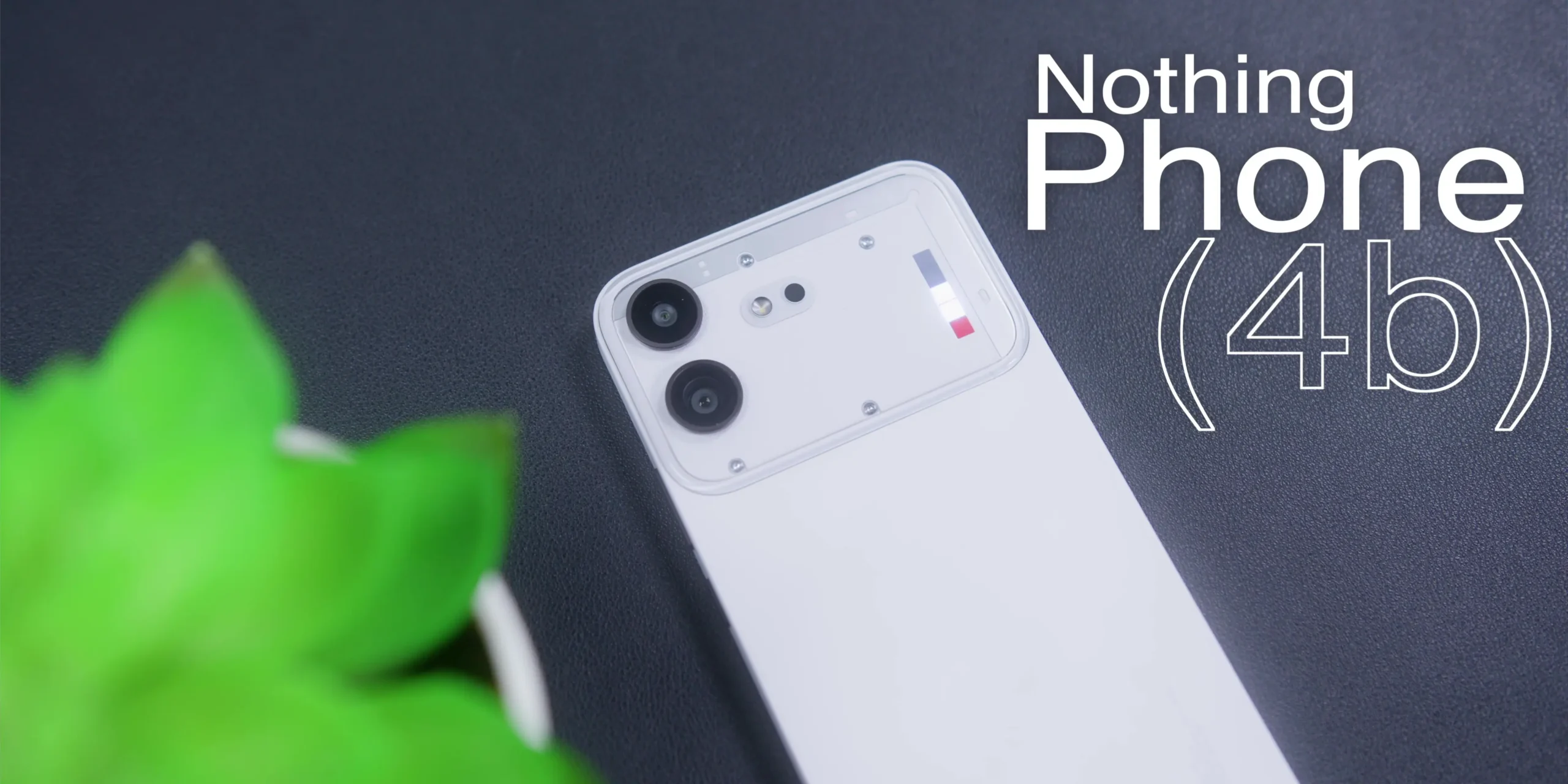
Nothing has officially entered the sub-RM1,600 smartphone segment in Malaysia with the release of the Nothing Phone (4b), priced at RM1,599 for its sole configuration featuring 8GB of RAM and 128GB of non-expandable storage. Having commenced retail availability in September 2026, the device introduces the company's trademark semi-transparent aesthetic, the hardware Essential Key, and clean Nothing OS 4.1 software to a lower price bracket. However, it requires noticeable hardware compromises, including a step down to the Qualcomm Snapdragon 6 Gen 4 platform, 33W wired charging, and a dual rear camera system devoid of a dedicated optical telephoto sensor. For Malaysian consumers, it trades outright silicon performance for an ad-free interface.
Key Facts
| Attribute | Value |
| Device Model | Nothing Phone (4b) |
| Malaysian Retail Price | RM1,599 |
| Release Date | September 2026 |
| Processor | Qualcomm Snapdragon 6 Gen 4 |
| Memory & Storage | 8GB RAM, 128GB non-expandable storage |
| Display | 6.77-inch 120Hz adaptive AMOLED (600 nits typical, 1,200 nits HBM, 2,000 nits peak) |
| Cover Glass | Dragontrail Glass |
| Ingress Protection | IP64 splash and dust resistance |
| Rear Camera Setup | 50MP main (with OIS) + 8MP ultrawide |
| Front Camera Setup | 1080p at 30fps video capture |
| Battery & Charging | 5,200mAh battery, 33W wired fast charging (no wireless charging) |
| Operating System | Nothing OS 4.1 based on Android 16 |
| Cellular SIM Support | Dual physical nano-SIM (no eSIM support) |
How Does the Design and Hardware Construction Hold Up?
The Nothing Phone (4b) utilises an all-plastic chassis with an IP64 splash-resistance rating, paired with an asymmetrical front display chin and Dragontrail protective glass. While the matte White finish eliminates fingerprint smudges and the transparent top section preserves brand identity, the device exhibits slight physical instability with a bottom-right wobble when laid flat on desks.
Biometric security operates reliably through a responsive in-display fingerprint sensor and facial recognition, which supports face unlocking with masks—a functional utility during regional seasonal haze. The Glyph Interface has been reduced relative to higher-tier models, incorporating 5 light blocks and 45 LEDs, compared to the 7 blocks and 63 LEDs found on the Nothing Phone (4a). The dedicated physical Essential Key remains present, granting rapid access to Essential Space and Essential Voice tools.
"I am going to be straight with you: this feels like a CMF phone wearing a Nothing jacket."
Jefferson, reviewer at adamlobo.tv
The Nothing Phone (4b) relies on an IP64-rated plastic build, Dragontrail glass, and a scaled-down 45-LED Glyph Interface while retaining the hardware Essential Key.
Can the Display and Snapdragon 6 Gen 4 Handle Daily Demands?
The device is powered by Qualcomm's Snapdragon 6 Gen 4 processor, paired with 8GB of RAM, driving a 6.77-inch 120Hz adaptive AMOLED panel. While advertised at a technical peak of 2,000 nits, the panel operates at 600 nits typical brightness and tops out around 1,200 nits in High Brightness Mode (HBM), with independent lab evaluations registering 1,119 to 1,160 nits under intense ambient illumination.
Day-to-day multitasking, application switching, and navigation remain smooth, although the Snapdragon 6 Gen 4 yields measurable raw processing power to the Snapdragon 7-series silicon in higher tier models. Storage is firmly capped at 128GB with no provision for external expansion via microSD card. Outdoor legibility is adequate, though prolonged exposure to direct tropical sunlight reveals the panel's lower ceiling when contrasted against higher-rated mid-range alternatives.
Running on a Qualcomm Snapdragon 6 Gen 4 with 8GB RAM, the handset delivers steady standard performance but restricts users to 128GB of non-expandable internal storage.
How Do the Cameras Perform in Real-World Conditions?
Imaging duties are handled by a 50MP primary sensor featuring optical image stabilisation (OIS) paired with an 8MP ultrawide module, omitting the telephoto hardware found on preceding models. Daylight photography yields passable image clarity, but digital cropping between 5x and 10x results in noticeable degradation, while low-light captures from the 8MP ultrawide sensor exhibit persistent grain and smudging.
Skin tones captured in portrait mode show aggressive post-processing, particularly during nighttime portrait selfies. Video recording specifications present a significant divide: the rear camera array is capable of 4K capture at 30fps, whereas the front-facing camera is restricted entirely to 1080p resolution at 30fps.
Camera capabilities are limited to a basic 50MP main and 8MP ultrawide setup that drops optical zoom and restricts front-facing video to 1080p at 30fps.
Does the 5,200mAh Battery and Charging Meet Regional Standards?
The Malaysian variant of the Nothing Phone (4b) houses a 5,200mAh battery pack that supports 33W wired charging, omitting wireless charging hardware entirely. During local testing over consecutive 48-hour periods, the handset demonstrated an average of 5 hours and 15 minutes of screen-on time before requiring a recharge.
The 33W charging profile lags noticeably behind contemporary mid-tier competition in the domestic market, where competing models regularly exceed 65W speeds. Connectivity features dual physical nano-SIM slots, with no internal eSIM functionality supported on local cellular networks.
A 5,200mAh battery delivers just over five hours of screen-on time but is constrained by modest 33W wired charging and a total lack of eSIM support.
What Is the Software Experience on Nothing OS 4.1?
The Phone (4b) runs Nothing OS 4.1 layered over Android 16, presenting an interface entirely free of pre-loaded bloatware, intrusive advertisements, or unwanted third-party system alerts. Initial software releases exhibited an input offset issue where lower-screen touch targets misaligned, though this calibration flaw was addressed via a post-launch over-the-air firmware update.
Despite the clean user experience, the device entered the market three months after Android 17 became available in June, yet shipped on Android 16. Furthermore, while Nothing OS 5.0 has begun rolling out to other portfolio models such as the Phone (3) and Phone (4a), Nothing has not yet confirmed an official upgrade schedule for the (4b).
Nothing OS 4.1 provides a clean, ad-free Android 16 user interface, though official availability timelines for the newer Nothing OS 5.0 remain unannounced.
What It Means for Malaysian Buyers
The Nothing Phone (4b) enters the Malaysian market at RM1,599, facing intense local competition that significantly outperforms it on hardware benchmarks. For RM100 less, the POCO X8 Pro (RM1,499) delivers a Dimensity 8300-Ultra processor, 12GB RAM, 256GB storage, a 6,500mAh cell, 100W charging, and an IP69K ingress rating. Similarly, the REDMI Note 17 Pro matches the (4b) at RM1,599 while offering an 8,340mAh battery, 67W charging, a 200MP camera, and 256GB storage. Buyers looking within the brand must weigh whether saving RM400 against the RM1,999 Nothing Phone (4a) justifies losing a 3.5x optical telephoto camera, 50W charging, 256GB storage, 12GB RAM, and Gorilla Glass 7i protection.
The Nothing Phone (4b) is recommended primarily for local users who prioritise a distinctive transparent aesthetic and a zero-ad, clean software environment over raw hardware specifications, gaming performance, and battery capacity. Power users, mobile gamers, and those requiring extensive storage or travel eSIM flexibility should look toward competing options in the RM1,400 to RM1,600 price bracket.
At RM1,599 in Malaysia, the Nothing Phone (4b) is a design and software purchase that cedes battery, charging speed, storage capacity, and raw performance to comparable POCO and REDMI alternatives.
Common Questions
How much does the Nothing Phone (4b) cost in Malaysia?
The Nothing Phone (4b) retails at an official price of RM1,599 in Malaysia. This single configuration includes 8GB of RAM and 128GB of internal, non-expandable storage.
Does the Nothing Phone (4b) support eSIM functionality?
No, the Nothing Phone (4b) does not support eSIM. Connectivity is handled strictly through dual physical nano-SIM card slots.
How does the Nothing Phone (4b) compare to the Nothing Phone (4a)?
The Phone (4a) costs RM1,999—an RM400 premium over the (4b). For that extra cost, it adds a Snapdragon 7-series chipset, 12GB RAM, 256GB storage, a 50MP 3.5x optical telephoto camera, 50W charging, Gorilla Glass 7i, and a 63-LED Glyph Interface.
Sources and Methodology
Data compiled directly from the comprehensive review and hardware evaluation conducted by Jefferson at adamlobo.tv ("Nothing Phone (4b) Review: RM1,599 CMF Phone in Disguise?"), published on 23 October 2026. Display luminance verifications incorporate independent laboratory measurements cited from PhoneArena and Notebookcheck. All Malaysian pricing figures reflect direct official retail values stated in the source text without currency conversion adjustments.
Related coverage
More Phones →Filed under
- #Tech
- #Review
Network · latest from sister sites