WhatsApp Tests Message Scheduling on Android Beta
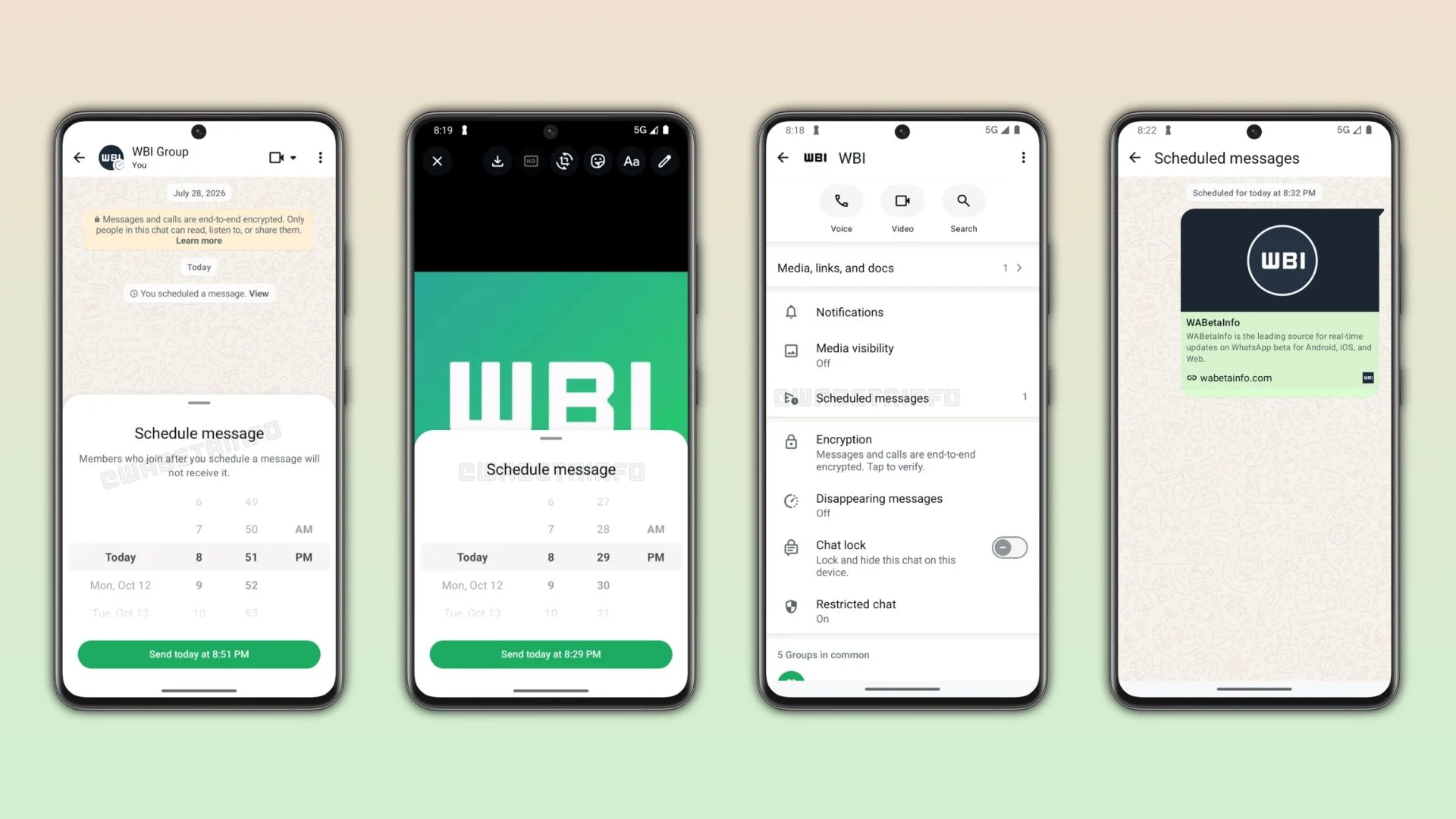
Meta has expanded its native communication toolkit with the deployment of message scheduling functionality to Android beta clients, providing handheld gamers, guild coordinators, and esports communities with automated message dispatching. Discovered in WhatsApp for Android beta version 2.26.40.7, the utility allows users on Android handheld consoles, mobile devices, and gaming tablets to queue text messages, images, and video clips up to two weeks in advance. The feature directly resolves clan coordination challenges across varied Southeast Asian time zones by automating raid notices, scrim bookings, and trade alerts without requiring persistent network connectivity during dispatch. For Malaysian and regional mobile competitors, this system delivers an integrated alternative to third-party scheduling bots, operating natively within peer-to-peer chats and gaming community groups.
Key Facts
| Attribute | Value |
| Client Version | WhatsApp for Android Beta 2.26.40.7 |
| Testing Platforms | Android OS, iOS (previously tested) |
| Deployment Date | 13 October 2026 |
| Monetary Cost | Free (Standard app distribution, RM0.00 / $0.00 / ¥0) |
| Developer / Publisher | WhatsApp LLC / Meta Platforms |
| Minimum Scheduling Buffer | 10 minutes |
| Maximum Scheduling Window | 14 days (two weeks) |
| Media Attachment Constraints | Single photo or single video per scheduled instance |
| Offline Execution Support | Supported (Server-side queue dispatches even if device is offline) |
| Direct Recipient Compatibility | Individual direct messages and existing group chat members |
How Does the Message Scheduling System Operate on Android Hardware?
Message scheduling on WhatsApp Android beta version 2.26.40.7 functions by replacing the standard single tap on the send icon with a long-press gesture after drafting text. Users select execution windows ranging from 10 minutes to two weeks in advance, routing messages to individuals or existing group members seamlessly.
The technical implementation handles plain text as well as multimedia payloads, though video and photographic assets are strictly capped at one item per scheduled entry. Once queued, scheduled transmissions are indexed inside a dedicated management drawer located within the chat info screen, permitting senders to review, modify, or permanently cancel outgoing entries before dispatch. Furthermore, server-side queueing ensures that transmissions successfully deliver at the selected timestamp even if the host handset or gaming device loses network connectivity.
WABetaInfo To those with access to the feature, making use of it is as simple as typing your message as usual, then holding the send button instead of just tapping it. You can then schedule the message for as soon as 10 minutes after, or up to two weeks in advance.
The WhatsApp Android beta version 2.26.40.7 client schedules messages from 10 minutes up to two weeks in advance, executing deliveries automatically even while the host device is offline.
What Group Privacy and Clan Management Protections Are Enforced?
Scheduled transmissions targeted at community groups enforce strict membership boundary rules to prevent unauthorized intelligence leaks. Only accounts registered as members of the group at the exact time the message was originally queued retain permission to view the transmission upon its future posting date.
For Southeast Asian mobile gaming guilds running competitive rosters in titles such as Mobile Legends: Bang Bang or PUBG Mobile, this integrity layer ensures that new recruits or transient players joining between the scheduling action and the posting timestamp cannot view sensitive strategic briefings. However, group administrators should note that media scheduling remains restricted to one attachment per transmission, necessitating separated entries for combined map strategies and video footage.
Users joining a WhatsApp group after a message is scheduled cannot view the dispatch when it posts, preventing information exposure to new entrants.
Southeast Asia & Malaysian Collector Verdict
For Malaysian hardware enthusiasts utilizing Android-based handhelds such as the AYANEO Pocket series, Logitech G Cloud, or AYN Odin alongside primary gaming phones, native scheduling eliminates the security risks associated with unverified third-party APK tools. While console-centric software releases from Play-Asia require calculating physical import costs of roughly $69.99 (~RM315) or ¥8,800 (~RM265) landed, Android operating updates distribute digitally without import levies or regional licensing friction.
Because the scheduling capability executes via server verification, competitive players operating on intermittent local telco connections—including CelcomDigi, Maxis, or U Mobile networks—gain guaranteed notification timing during tournaments without leaving hardware idling in power-consuming background modes. As the beta broadens beyond version 2.26.40.7, local players can anticipate public rollout parity across all Android-powered gaming setups.
The server-side execution model guarantees dispatch across Malaysian mobile networks without requiring gaming handhelds to maintain active background connections.
Common Questions
Can I schedule messages to individual contacts or only groups?
The current Android beta implementation allows users to schedule messages directly to individual contacts as well as group chats, removing the group-only restriction seen in earlier preliminary builds.
What is the minimum and maximum time window for scheduling a message?
Users can schedule dispatches for as soon as 10 minutes after drafting or set a scheduled delivery date up to two weeks in advance.
Will scheduled messages still send if my phone loses internet access?
Yes. Once a message is scheduled and synced to the server queue, it will automatically transmit to the recipient at the scheduled time even if the sending device is completely offline.
Sources and Methodology
Technical dispatch data verified from beta documentation reported by WABetaInfo regarding WhatsApp for Android client version 2.26.40.7, collated via Lowyat.NET reporting by Ian Chee on 13 October 2026. Currency conversions follow standard industry hardware baseline rates at $69.99 (~RM315) and ¥8,800 (~RM265) for import comparison. All software features reflect current beta operational states and remain subject to developer revision prior to broad public release.
Related coverage
More AI & Software →Filed under
- #Tech
Network · latest from sister sites