Sennheiser HDB 630 Review High Fidelity Audio Trade-Offs
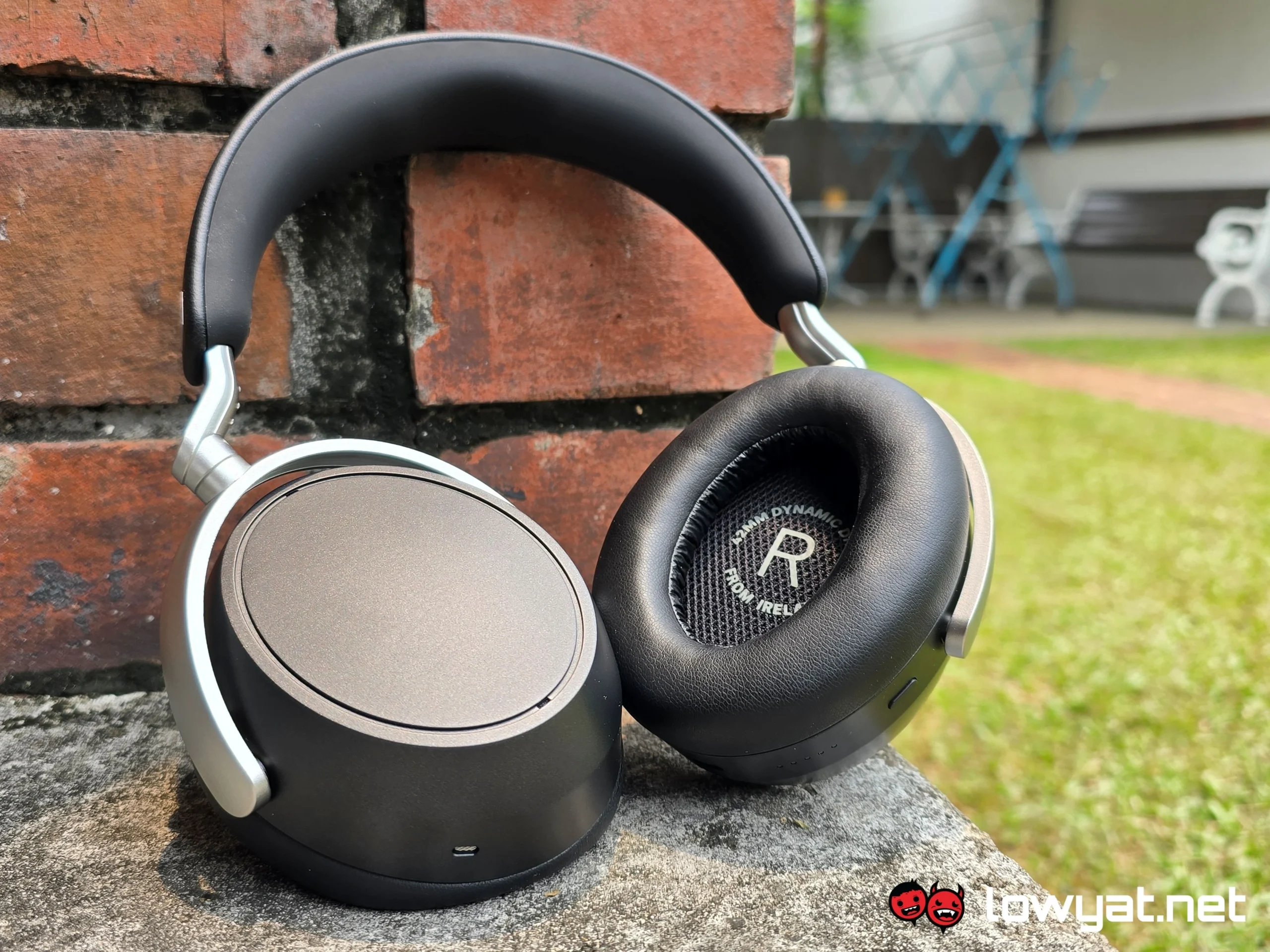
The Sennheiser HDB 630 is a pair of premium, closed-back wireless headphones manufactured by Sennheiser to deliver high-resolution wireless listening alongside deep sound customization. Designed for audiophiles and general listeners navigating a crowded market, the headset addresses standard wireless audio limitations by bundling direct wired connectivity and a dedicated USB-C wireless transmitter for high-fidelity audio transmission. The official product page is hosted at Sennheiser’s canonical regional portal (my.sennheiser-hearing.com).
Key Facts
  Attribute
  Value


  Product Name
  Sennheiser HDB 630


  Manufacturer
  Sennheiser


  Retail Price
  RM2,599


  Headphone Type
  Closed-back wireless headphones


  Transducer / Driver
  42mm dynamic driver (per earcup)


  Wireless Connectivity
  Bluetooth 5.2; BTD700 USB-C dongle


  High-Resolution Audio Support
  24-bit/96kHz (via BTD700 dongle, USB-C, or line-in)


  Wired Inputs
  3.5mm analog cable; direct USB-C audio cable


  Battery Runtime
  60 hours with Active Noise Cancellation (ANC) active


  Headband & Earcup Materials
  Plastic headband structure; Ideatex Japan leatherette padding and earcup wrap


  Included Accessories
  Hard-shell polygonal triangular carrying case; BTD700 USB-C dongle; cables


  Companion Software
  Smart Control Plus app
What Audio Quality Does the Sennheiser HDB 630 Deliver?
The Sennheiser HDB 630 produces an uncolored, flat sound signature out of the box, with the low-end frequencies emerging as the most prominent pitch. While the factory tuning delivers clear mids and highs without harshness, maximizing the acoustic experience requires personalized frequency adjustments through Sennheiser’s companion software application.
During acoustic testing by Lowyat.NET, bass-heavy tracks such as Nina Simone’s “Feeling Good,” Stacey Kent’s “Venus De Milo,” and Bela Fleck and The Flecktones’ “Flight of the Cosmic Hippo” demonstrated controlled punch rather than reverberating bass. Vocals on Teddy Swims’ “Lose Control” maintained full physical presence without piercing trebles, while instrument positioning on Yoko Kanno and the Seatbelts’ “TANK!” exhibited an accurate soundstage. However, unadjusted guitar tracks like The Eagles’ live performance of “Hotel California” lacked warmth until adjusted via the mobile equalizer.
“Out of the box, the HDB 630 sounds very neutral, or as my colleague puts it, flat, and he’s not wrong. That being said, and if I had to choose a pitch that stands out, I would say the lows are the strongest.” — Lowyat.NET Review
The Sennheiser HDB 630 features 42mm dynamic drivers that transmit 24-bit/96kHz audio resolution when paired with the bundled BTD700 USB-C dongle or a direct USB-C cable connection.
How Long Does the Battery Last in Daily Use?
The Sennheiser HDB 630 provides approximately 60 hours of continuous audio playback with Active Noise Cancellation switched on. Real-world testing confirms this specification under mixed media workloads, yielding roughly six full days of active productivity and entertainment listening at 30% volume before the battery requires a recharge.
Lowyat.NET tested the battery across daily routines consisting of five hours of workplace listening at 30% output volume followed by an additional five hours of video streaming on YouTube and Netflix. Across ten total operating hours per day, the headphones consistently completed six-day cycles on a single charge. The primary operational compromise involves PC virtual meetings: using the integrated microphones over the BTD700 dongle caused voices to sound distant, muffled, or scratchy, whereas standard Bluetooth voice calling operated properly.
Sennheiser rates the HDB 630 battery life at 60 hours with active noise cancellation enabled, a figure matched during daily real-world testing.
What Are the Main Usability and Design Drawbacks?
The Sennheiser HDB 630 exhibits functional trade-offs in physical ergonomics, active noise suppression, and touch responsiveness. The headband tension becomes noticeable during extended wear sessions, the ambient sound mode introduces audio muddiness, and the right earcup capacitive touch sensor exhibits hypersensitivity that can lead to unintentional track pauses.
Physical controls are limited to a single hardware button, routing primary navigation to a rear capacitive gesture pad on the right ear enclosure. Swiping vertically triggers wide volume jumps rather than gradual steps, while the pinch gesture for ambient passthrough adjustment often fails to register. Furthermore, the active noise cancellation system allows audible ambient bleed compared to rival solutions, and the Ideatex Japan leatherette exterior wraps a generic plastic frame that lacks premium metal construction.
The right earcup gesture pad on the Sennheiser HDB 630 adjusts volume in large increments rather than fine steps and triggers accidental pauses upon light contact.
How It Compares
The Sennheiser HDB 630 targets audio enthusiasts who prioritize extended battery endurance and dynamic 24-bit/96kHz pitch equalization over industry-leading active noise reduction. Buyers focused on superior physical comfort and total ambient silence may find competing flagship alternatives more suitable at the RM2,599 price tier.
  Model
  Price
  Sound Profile Focus
  ANC & Controls Performance
  Wearer Comfort


  Sennheiser HDB 630
  RM2,599
  Flat, neutral sound; 24-bit/96kHz via BTD700 dongle; app EQ
  Moderate ANC; muffled ambient mode; sensitive touch panel
  Balanced weight; plastic headband causes pressure after several hours


  Sony WH-1000XM6
  Not specified in source
  Consumer premium baseline
  Far superior active noise cancellation and refined gesture controls
  More comfortable over prolonged listening sessions


  Bowers & Wilkins Px7 S3
  Not specified in source
  Audiophile premium alternative
  Not detailed in source
  Higher comfort profile than HDB 630 during extended wear
While competitor models deliver superior noise cancellation and ergonomic comfort, the Sennheiser HDB 630 differentiates itself through its 60-hour runtime and high-resolution USB-C dongle system.
Common Questions
Does the Sennheiser HDB 630 work well for computer conference calls?
The Sennheiser HDB 630 is not recommended for PC virtual meetings when paired through the BTD700 dongle. Integrated microphone audio sounds distant, muffled, or scratchy over the dongle, although microphone performance functions adequately when connected directly through regular Bluetooth.
Can you adjust the sound profile on the Sennheiser HDB 630?
Sound customization is managed through Sennheiser’s Smart Control Plus companion app. Users can dynamically adjust pitch levels and equalization curves to correct the factory flat tuning, restoring warm instrument tones and personalized audio balance across the frequency spectrum.
What physical materials are used in the Sennheiser HDB 630 construction?
The headphone chassis utilizes a lightweight plastic headband rather than metal hardware. Contact surfaces, including the headband cushioning and outer earcups, are lined with Ideatex Japan leatherette, designed to deliver durability and balanced head clamp pressure without vice-like tension.
Sources and Methodology
This technical summary is derived directly from the hands-on consumer technology evaluation published by Lowyat.NET, titled “Sennheiser HDB 630 Review: Audiophilia With Trade-Offs,” authored with photography by John Law. All operational observations, hardware attributes, retail pricing (RM2,599), and testing scenarios reflect documented benchmarks under ambient and wired conditions. No currency conversions, external data extrapolations, or synthetic metrics were introduced. This article was last updated on October 5, 2026.
Related coverage
More Gadgets & Audio →Filed under
- #Gaming
- #News
Network · latest from sister sites