Rare AMD Prototype Card Houses Four Radeon RX 470 GPUs
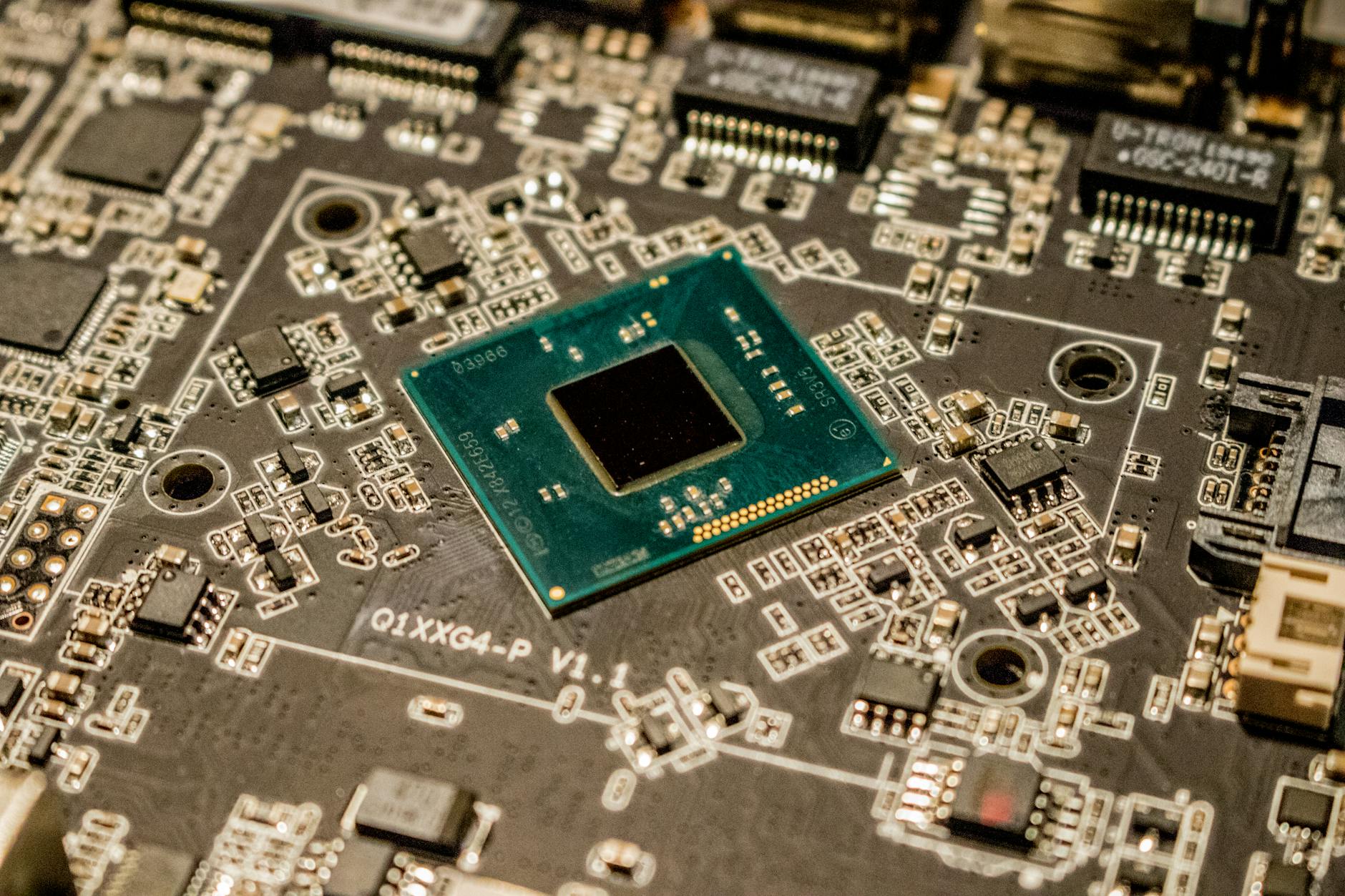
An unreleased prototype AMD graphics card housing four discrete Radeon RX 470 GPUs on a single printed circuit board surfaced online on 3 November 2026 after images were published by X user GOK. Featuring a 2x2 layout of Polaris-era silicon paired with eight GDDR5 memory chips per processor, the board delivers 32GB of combined memory and draws power from four 8-pin PCIe connectors. Industry documentation indicates the engineering sample was fabricated specifically for Ethereum cryptocurrency mining rather than commercial PC gaming. For Malaysian hardware enthusiasts and system builders, the discovery offers historical insight into specialised mining hardware, though the unit remains a non-commercial prototype with no retail availability, official pricing, or local distribution channels in Malaysia.
Key Facts
The prototype AMD board integrates four Polaris-based Radeon RX 470 graphics processors onto a single massive printed circuit board, providing 32GB of combined GDDR5 memory. Engineered primarily for cryptocurrency mining, the non-commercial hardware relies on four 8-pin PCIe power connectors without confirmed retail pricing or general market availability.
The engineering board combines four discrete Radeon RX 470 GPUs to provide 32GB of total GDDR5 memory across four dedicated power delivery segments.
| Attribute | Value |
| GPU Architecture | AMD Polaris (Radeon RX 470, originally launched in 2016) |
| Die Configuration | Four GPUs arranged in a 2x2 layout on one PCB |
| VRAM Allocation | 8GB GDDR5 per GPU (32GB combined total across 32 memory chips) |
| Power Inputs | Four 8-pin PCIe power connectors |
| Power Consumption | Total board power rating unconfirmed |
| Intended Workload | Cryptocurrency mining (Ethereum hashrate processing) |
| Retail Status | Unreleased engineering prototype; no retail distribution |
| Malaysian Pricing & Availability | Not applicable; never submitted for local commercial release |
Why Was a Quad-GPU Radeon Board Built for Cryptomining?
The four-GPU card was engineered to maximise computing density during the Ethereum mining boom, when commercial GPU supplies faced widespread shortages. By soldering four Radeon RX 470 processors onto one PCB, operators avoided purchasing multiple motherboards and power risers, leveraging the architecture's renowned efficiency and consistent mining hashrate.
Cryptocurrency miners targeted the Radeon RX 470 shortly after its 2016 launch due to its optimal balance between acquisition cost, power consumption, and hashing performance. Images shared by hardware collector GOK reveal that each of the four GPU dies is bordered by eight GDDR5 memory chips and its own dedicated power circuitry, effectively clustering four full graphics cards onto one interconnect.
"Might be the biggest PCIE graphic card in the world....?"
GOK via X (@GOKForFree)
The Polaris-era Radeon RX 470 was widely deployed in high-density crypto operations due to its consistent hashrate in Ethereum mining algorithms.
How Does the Board Compare to Previous Dual-GPU Graphics Cards?
Multi-GPU configurations previously appeared in commercial flagships from AMD and NVIDIA, but those consumer releases linked two processors rather than four. While consumer dual-GPU cards served ultra-high-end gaming rigs and workstations, this quad-GPU prototype stripped away conventional display outputs and display connectivity to focus exclusively on parallel computational throughput.
In 2014, AMD released the dual-GPU Radeon R9 295X2, combining two R9 290X processors clocked at 1.02GHz, 5,632 Stream Processors, 8GB of GDDR5 memory across a 512-bit bus, and an integrated single-fan 120mm Asetek liquid cooler supporting four mini-DisplayPort outputs. NVIDIA countered that same year with the GeForce GTX Titan Z, which featured dual Kepler GPUs, 12GB of GDDR5 VRAM, and 5,760 CUDA cores. Unlike those consumer products designed to drive monitor displays, the quad-RX 470 board was fabricated without standard external video ports.
Commercial dual-processor flagships like the Radeon R9 295X2 and GeForce GTX Titan Z were manufactured for high-end consumer display rendering rather than headless computation.
What It Means for Malaysian Buyers
Malaysian PC builders and gamers cannot purchase this quad-GPU prototype because it was never mass-produced, officially priced, or submitted for local regulatory clearance. The unit remains an engineering oddity from previous mining cycles, offering historical curiosity rather than a viable alternative to modern graphics hardware currently retailed in Malaysia.
Because the unit is a non-commercial engineering sample, it carries no distribution from local vendors, no official Malaysian ringgit (RM) pricing, and no compliance approval from the Standard and Industrial Research Institute of Malaysia (SIRIM) or the Malaysian Communications and Multimedia Commission (MCMC). Local gamers requiring discrete graphics should rely on commercially supported GPUs with standard multi-year local distributor warranties.
The quad-GPU Radeon RX 470 prototype holds no retail status or regulatory approval in Malaysia and serves strictly as an archival collector piece.
Common Questions
Hardware analysts and PC builders commonly enquire about the technical viability, power consumption, and commercial availability of this quad-GPU Radeon RX 470 board. As an unreleased engineering prototype designed for cryptocurrency mining farms, the hardware lacks standard video outputs, official retail distribution, and software support for consumer desktop computing.
The four-GPU Polaris card remains a non-commercial engineering curiosity without gaming driver support or consumer retail channels.
Can this quad-GPU card run PC games in Malaysia?
No. The prototype was built without standard display outputs for headless mining operations, and modern games lack software support for four-way CrossFire scaling. Malaysian PC gamers would encounter severe driver incompatibility and physical display connection barriers.
How much power does the quad-RX 470 graphics card consume?
While the exact total board power remains unconfirmed, the card incorporates four 8-pin PCIe auxiliary power connectors alongside dedicated power delivery stages for each GPU. This configuration indicates the board was engineered to handle substantial electrical loads across all four dies.
Is this AMD Radeon card available for purchase in Malaysia?
No. The board is an unreleased prototype shared by hardware collector GOK and was never distributed to retail channels or local authorised vendors in Malaysia. There is no local pricing, warranty coverage, or commercial availability for the device.
Sources and Methodology
This dispatch was compiled from hardware documentation and leak analysis published by Malaysian technology outlet Lowyat.NET on 4 November 2026, referencing original photographs from X user GOK and secondary reports by VideoCardz. All technical specifications reflect verified source records, with no price conversions required due to the prototype's non-commercial status.
All hardware specifications and architectural observations derive directly from photographic analysis and historical product archives verified on 4 November 2026.
- Primary Source: Lowyat.NET ("This Prototype AMD Radeon Card Houses Four RX 470 GPUs" by John Law, published 4 November 2026).
- Original Media: X post published by user @GOK on 3 November 2026.
- Secondary Reporting: VideoCardz hardware archives.
- Comparative Reference: Historical specifications for AMD Radeon R9 295X2 and NVIDIA GeForce GTX Titan Z (2014) verified against published hardware records.
- Currency Conversions: None conducted, as no commercial pricing exists for this unreleased hardware.
Related coverage
More Laptops & PCs →Filed under
- #Tech
- #PC Gaming
Network · latest from sister sites