Chinese Factories Strip RTX 5090 GPUs for AI Servers
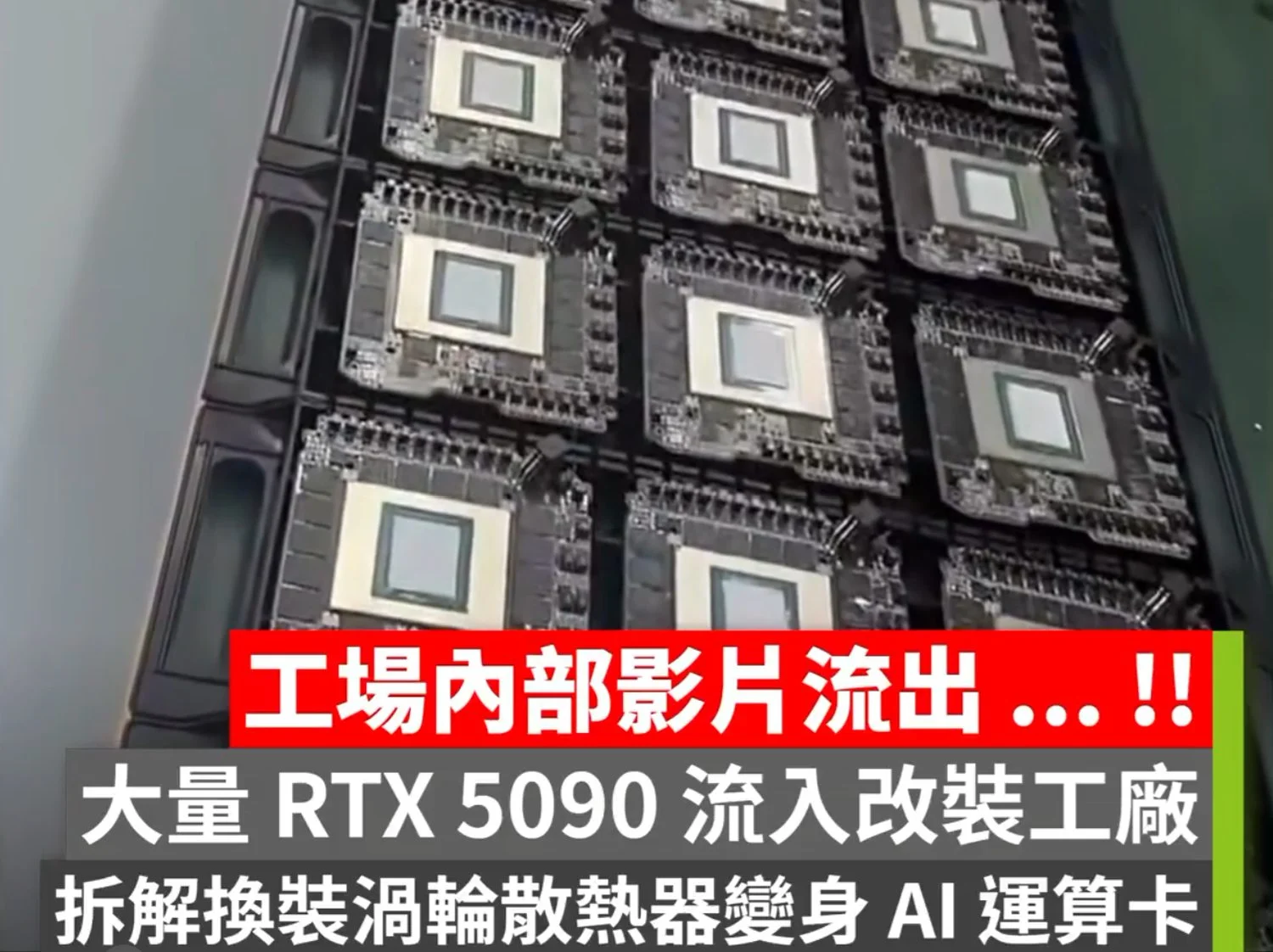
Chinese modification factories are systematically dismantling retail NVIDIA GeForce RTX 5090 graphics cards to harvest their silicon for artificial intelligence server infrastructure, according to leaked factory footage reported by Lowyat.NET on 26 October 2026. Industrial assembly lines are unboxing consumer units, desoldering the flagship GB202 graphics processors and GDDR7 memory modules, and transplanting them onto custom printed circuit boards paired with dual-slot blower coolers designed for high-density enterprise server racks. Driven by enterprise demand, consumer cards now trade far above recommended retail prices at an average of RM28,000, severely constraining standard retail availability for gaming hardware across regional Asian markets including Malaysia.
Key Facts
| Attribute | Value |
| Hardware Model | NVIDIA GeForce RTX 5090 (Founders Edition and third-party partner cards) |
| GPU Architecture & Die | Blackwell architecture, GB202 processing die |
| Memory Configuration | GDDR7 VRAM modules |
| Target Form Factor | Custom dual-slot printed circuit boards with blower-style server coolers |
| Harvested Brands | Asus, Gigabyte, MSI, and NVIDIA Founders Edition |
| Reported Market Price | Average RM28,000 per card |
| Original Leak Date & Source | 23 October 2026 via HKEPC on X; reported 26 October 2026 by Lowyat.NET |
Why Are Chinese Factories Stripping RTX 5090 Graphics Cards?
Chinese assembly facilities are stripping consumer NVIDIA GeForce RTX 5090 cards because enterprise artificial intelligence clusters require dense, rack-mountable computational hardware. Standard three-fan consumer cooling solutions cannot fit into enterprise server racks, forcing facilities to extract the bare processing silicon and memory for custom dual-slot blower-style boards suited for data-centre thermal configurations.
The leaked operational footage highlights an organized supply chain split into distinct stages: bulk procurement, hardware unboxing, desoldering, component transplantation, testing, validation, and repackaging. Facilities acquire top-tier units across all major partner catalogues alongside official Founders Edition inventory.
Technicians sit at their stations, desoldering the GB202 die and GDDR7 memory chips, before transplanting them onto custom PCBs with dual-slot blower-style coolers.
John Law, Lowyat.NET
Industrial-scale desoldering operations convert consumer Blackwell graphics cards directly into enterprise-ready AI compute modules.
Which Components Are Harvested from the Retail Cards?
Modifying facilities extract the core NVIDIA GB202 graphics processing die and high-speed GDDR7 memory chips from each dismantled graphics card. The original retail cooling assemblies, stock three-fan shrouds, and consumer circuit boards are discarded or replaced in favour of high-density chassis layouts engineered for enterprise server deployments.
The RTX 5090 represents NVIDIA’s primary consumer Blackwell GPU, positioned second only to the enterprise RTX Pro 6000 Blackwell Edition. Because enterprise silicon carries constrained supply or export limitations, conversion factories treat consumer inventory as a substitute source of raw GB202 silicon.
Factory workstations strip the GB202 die and GDDR7 memory modules entirely away from the original consumer packaging.
What It Means for Malaysian Buyers
Malaysian PC enthusiasts and system builders face severe stock shortages and elevated grey-market markups as consumer units are diverted directly to enterprise conversion lines. While Malaysian retail distribution channels traditionally carry third-party brands such as Asus, Gigabyte, and MSI, broad-scale commercial diversion has pushed transaction values to an average of RM28,000.
The source documentation does not confirm local distributor allocations or official Malaysian retail pricing for unaffected stock. Prospective local buyers seeking standard gaming hardware must contend with enterprise-driven grey-market inflation until baseline consumer supply stabilizes through authorized domestic channels.
Malaysian consumers face inflated prices averaging RM28,000 as international enterprise demand consumes standard retail inventories.
Common Questions
Which graphics card models are targeted by the conversion factories?
Factories procure units across all brands, including flagship models from Asus, Gigabyte, and MSI, as well as NVIDIA Founders Edition inventory, stripping each card down to its fundamental processing die and memory chips.
What cooling design replaces the original triple-fan heatsink?
Technicians transplant the salvaged GB202 processor and GDDR7 modules onto specialized dual-slot printed circuit boards equipped with compact blower-style heatsinks suited for airflow management in standard high-density server rack environments.
What is the prevailing market price reported for the RTX 5090?
Due to acute supply scarcity and heavy commercial demand from AI operations, units trade well above initial MSRP figures, reaching an average market price of RM28,000 according to industry tracking.
Sources and Methodology
Data compiled from reporting published by Lowyat.NET (John Law, 26 October 2026), citing initial factory footage released by HKEPC on X (23 October 2026) alongside supplementary reporting from TweakTown. All monetary values reflect reported Malaysian ringgit figures directly cited in the source text without external conversion or estimation.
Related coverage
More Laptops & PCs →Filed under
- #Tech
- #PC Gaming
Network · latest from sister sites